

Azərbaycanda Onlayn Ödəniş Təhlükəsizliyi Məhdudiyyətlər və Səlahiyyətlər
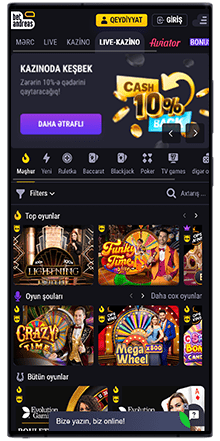
In Azerbaijan, the digital landscape for online gambling presents unique challenges for user security and financial privacy. While the activity operates in a legal gray area, many citizens participate, making the protection of personal data and manat transactions a critical concern. This analysis examines the core security mechanisms, from two-factor authentication to antifraud systems, and evaluates their limitations within the local context. Understanding the quality of evidence behind security claims and the common risks specific to Azerbaijani users is essential for making informed decisions. For instance, a user might search for a secure platform and encounter a service like the betandreas app, which underscores the need to scrutinize any platform’s security protocols independently of its branding or promotions.
Financial Security and Payment Gateways in Azerbaijan
The cornerstone of safe online gambling is secure financial transactions. In Azerbaijan, users primarily rely on bank cards, localized electronic wallets, and sometimes cryptocurrency to fund accounts. Each method carries distinct security implications and vulnerabilities tied to the local financial ecosystem. The encryption standard used during a transaction, typically TLS 1.2 or higher, is a fundamental layer of protection that scrambles data between the user’s device and the operator’s server. However, the security chain is only as strong as its weakest link, which often involves the user’s own device security or the practices of the payment processor handling the manat conversion.
Limitations of Local Payment Processing
A significant risk factor stems from the intermediaries involved in processing payments for an internationally accessible service. When a user deposits AZN, the transaction may pass through third-party payment gateways that are not subject to stringent Azerbaijani financial oversight. This creates a data trail that can be vulnerable to interception or misuse. Furthermore, the evidence of security provided by these gateways is often generic certification, which may not account for localized fraud patterns targeting Azerbaijani cardholders. Users should be wary of platforms that do not clearly state their partnership with reputable, internationally audited payment processors.
The Role and Risks of Two-Factor Authentication
Two-factor authentication (2FA) has become a benchmark for account security, adding a layer beyond a simple password. In the context of online gambling, 2FA is crucial for protecting both account access and withdrawal authorization. The most common methods involve SMS codes, authenticator apps, or email verification. While 2FA significantly elevates security, its implementation and effectiveness in Azerbaijan have specific limitations that users must acknowledge to avoid a false sense of safety.
A primary vulnerability is SMS-based 2FA. Despite its convenience, it is susceptible to SIM-swapping attacks, where a fraudulator convinces a mobile operator to port a victim’s number to a new SIM card. Once in control of the number, they can intercept all SMS verification codes. The quality of evidence for an operator’s 2FA security often lacks transparency regarding protections against such social engineering attacks. Furthermore, reliance on email for 2FA introduces risks if the user’s email account itself is not secured with its own robust 2FA, creating a chain of dependency. Mövzu üzrə ümumi kontekst üçün problem gambling helpline mənbəsinə baxa bilərsiniz.
- SMS 2FA is vulnerable to SIM-swap fraud, a risk dependent on local telecom security practices.
- Authenticator apps like Google Authenticator or Authy are more secure but require smartphone access and setup.
- Email-based 2FA security is only as strong as the security of the email provider and the user’s email password.
- Many platforms offer 2FA as optional, meaning a large portion of user accounts remain fundamentally vulnerable.
- The evidence of 2FA efficacy presented by operators rarely includes data on prevented account takeovers.
- Biometric 2FA (fingerprint, facial recognition) is emerging but raises additional privacy concerns about data storage.
- Backup codes for 2FA must be stored securely offline; losing them can permanently lock a user out of their account.
- Time-based one-time passwords (TOTP) from authenticator apps are phishable if a user enters them on a fake login page.
Antifraud Systems and Their Evidence Gap
Modern online gambling platforms employ sophisticated antifraud systems designed to detect suspicious activity, such as multiple account creation, irregular betting patterns, or fraudulent payment attempts. These systems use machine learning algorithms and vast datasets to assess risk in real-time. For the Azerbaijani user, the critical question is how well these global systems are calibrated to recognize legitimate activity from this region without causing false positives, such as unfairly flagging a deposit from a local bank.

The evidence for the effectiveness of these systems is often proprietary and opaque. Operators claim advanced protection but provide little verifiable, third-party audit data to support these claims. This creates an evidence quality gap where the user must trust the operator’s marketing. Furthermore, antifraud measures can sometimes conflict with user privacy, as they require extensive data collection and analysis of user behavior, device fingerprints, and transaction history to function effectively.
| Antifraud Measure | Intended Purpose | Potential Risk for Azerbaijani Users |
|---|---|---|
| Device Fingerprinting | Identify users attempting to create multiple accounts from the same device. | Invades privacy; may incorrectly flag shared devices in households or internet cafes. |
| IP Address Geolocation | Block access from prohibited jurisdictions or detect VPN use. | Can block legitimate users traveling abroad or using legitimate privacy tools. |
| Behavioral Biometrics | Analyze mouse movements and typing patterns to verify user identity. | Creates a highly detailed user profile with unclear data storage and usage policies. |
| Transaction Pattern Analysis | Flag unusual deposit or withdrawal activity for manual review. | Can delay legitimate withdrawals for users with atypical but legal financial behavior. |
| Document Verification (KYC) | Verify user identity to prevent money laundering and underage access. | Sensitive personal document copies stored on servers vulnerable to data breaches. |
| Velocity Checks | Limit the frequency of deposits or bets in a short period. | A responsible gambling tool that can also be a point of friction for users. |
| Proxy and VPN Detection | Enforce geographic restrictions and terms of service. | May punish users seeking privacy rather than circumventing location rules. |
Common Privacy Risks in the Azerbaijani Context
Privacy concerns extend beyond payment details to encompass the entire digital footprint a user leaves on a gambling platform. In Azerbaijan, where digital surveillance and data protection laws are evolving, the risks associated with data collection by offshore entities are pronounced. Users often unknowingly consent to extensive data harvesting through lengthy and complex terms of service agreements. This data can include not only financial and identity information but also detailed records of gambling habits, losses, and time spent on the platform.
A significant risk is the potential for data leakage or sale to third-party marketing firms. Personal data linked to gambling behavior is highly sensitive and could be used for targeted advertising or fall into the hands of scammers. The evidence of a platform’s commitment to privacy is typically found in its privacy policy, but these documents are rarely written for clarity and are subject to change without prominent user notification. The absence of strong, enforceable data protection agreements akin to the GDPR for Azerbaijani citizens leaves users with little recourse in case of a privacy breach.
- Data sharing with “trusted partners” as stated in privacy policies is a major vector for loss of control over personal information.
- Cookies and trackers on gambling sites can build a detailed profile of user behavior across the web, not just on the gambling site.
- Chat logs and customer support interactions are often recorded and stored, containing potentially sensitive personal disclosures.
- Location data, even approximate, can be collected via IP address and used to infer patterns of life.
- Inadequate data encryption at rest, meaning stored data on servers is not properly secured, leading to breach vulnerabilities.
- Insider threats from employees or contractors of the gambling operator who have access to user databases.
- Cross-border data transfer to jurisdictions with weak or no data protection laws, putting Azerbaijani user data at global risk.
- Phishing attacks specifically crafted to mimic gambling site communications, tricking users into revealing login credentials.
- Malware and spyware that can be inadvertently downloaded, capturing keystrokes and screen data.
- Social engineering attacks where fraudulators pose as customer support to extract account information.
Evaluating Security Claims and Evidence Quality
For an Azerbaijani user, discerning real security from marketing hype is a difficult but necessary task. Operators frequently use badges, seals, and technical jargon to imply safety. True evidence of security comes from independent verification and transparent practices. A key metric is the licensing jurisdiction’s regulatory requirements for cybersecurity, though many platforms serving Azerbaijan are licensed offshore where standards vary widely. Users should look for specific, verifiable information rather than generic assurances. Qısa və neytral istinad üçün payment cards mənbəsinə baxın.
High-quality evidence includes regular security audits conducted by reputable third-party firms like eCOGRA, iTech Labs, or GLI, with public summaries of the findings. These audits check the Random Number Generator (RNG) for fairness and the integrity of financial and data systems. Another strong indicator is the use of advanced encryption protocols for all data transmissions and storage. Conversely, low-quality evidence consists of vague statements like “state-of-the-art security” without specifics, or security seals that are merely purchased marketing tools without a meaningful audit behind them.
Practical Steps for User Vigilance
While systemic risks exist, users in Azerbaijan can adopt practical measures to enhance their personal security posture. These steps focus on creating defensive layers that compensate for potential weaknesses in the platforms themselves. The goal is to minimize the attack surface and limit the damage in case of a security incident. This proactive approach is more reliable than relying solely on the promises of any single service provider.
- Use unique, strong passwords for your gambling account, never reusing passwords from email or banking.
- Enable 2FA using an authenticator app instead of SMS whenever the platform offers it.
- Use a dedicated email address with its own strong password and 2FA for all gambling-related correspondence.
- Consider using a virtual bank card or a specific e-wallet with limited funds for gambling transactions to isolate your primary bank accounts.
- Regularly review your account statement and transaction history for any unauthorized activity.
- Keep your device’s operating system, browser, and antivirus software updated to the latest versions.
- Never conduct gambling transactions or log into your account over public or unsecured Wi-Fi networks.
- Be skeptical of unsolicited emails or messages claiming to be from customer support; always log in directly to the platform to check.
- Read the privacy policy to understand what data is collected and how it might be shared, even if the document is complex.
- Clear browser cookies and cache regularly, or use a separate browser profile for gambling activities.
The Regulatory Landscape and Its Impact on Security
The security and privacy environment for online gambling in Azerbaijan is intrinsically linked to its regulatory status. The absence of a clear, domestic licensing and regulatory framework for online operators means there is no local authority enforcing minimum cybersecurity standards, conducting audits, or providing a channel for user complaints related to data breaches. This regulatory vacuum shifts the entire burden of security onto the policies of the offshore operator and the vigilance of the individual user. It creates a scenario where the evidence of security is largely self-reported by the service providers.
This situation contrasts with regulated markets where gambling commissions mandate specific technical standards for data protection, fair gaming, and financial integrity. In such markets, users have recourse to an official body if their data is mishandled. For Azerbaijani users, the lack of this local oversight means that while international auditing firms provide some level of check, the enforcement mechanism is weak. Ultimately, the security of one’s data and funds hinges on the ethical and technical commitment of an entity that operates outside direct Azerbaijani legal jurisdiction, making due diligence before engagement not just advisable but essential.